
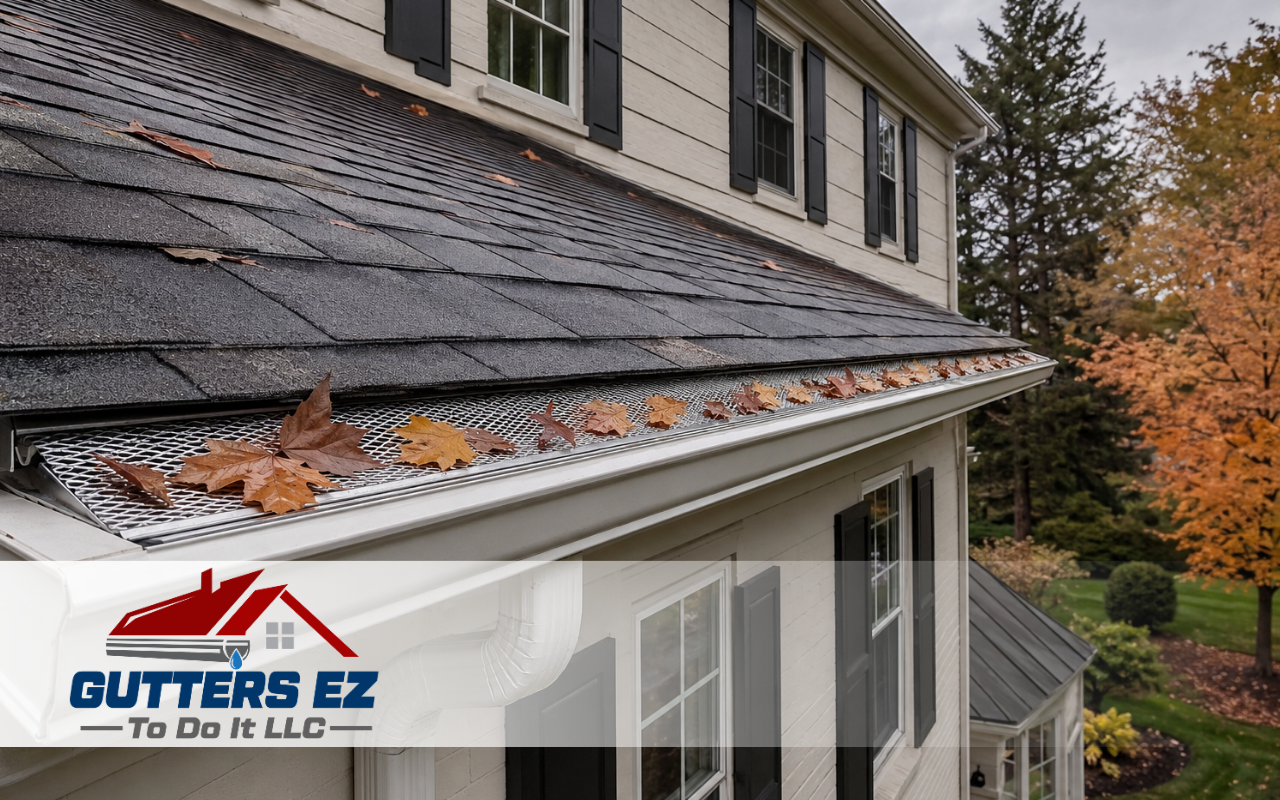
What Makes Durable Gutter Guards Worth Choosing?
Durable gutter guards help block leaves, pine needles, and roof debris while allowing rainwater to enter the gutter. For Pennsylvania homes, stainless-steel micro-mesh and reinforced aluminum often provide the best balance of filtration, weather resistance, and structural strength.
Choosing the right protection can reduce clogs and support consistent water flow. Before planning an upgrade, explore our professional gutter services.
Pennsylvania Weather Demands Stronger Gutter Protection
Montgomery County homes experience rain, high summer temperatures, snow, and freezing conditions. According to the National Weather Service, Philadelphia receives a normal 44.11 inches of annual precipitation. It also records measurable precipitation on approximately 121 days each year.
Cold weather adds further pressure. The same climate normals show approximately 78 days annually with minimum temperatures at or below freezing. Repeated temperature changes can expose weak plastic guards to cracking, warping, and loose connections.
Local debris also affects performance. Broad leaves may slide from solid covers, while pine needles, seeds, pollen, and shingle grit can pass through wide screens. Therefore, homeowners should compare each design against the debris surrounding their property.
Strong Materials Extend Gutter Guard Performance
Material quality influences corrosion resistance, structural strength, and temperature stability. Stainless steel performs well in fine-mesh systems because it filters small debris while resisting rust. Reinforced aluminum offers lighter weight, weather resistance, and dependable structural support.
Plastic and vinyl screens usually cost less initially. However, prolonged UV exposure and freezing temperatures may cause lower-quality products to fade, become brittle, or lose their shape. This makes material selection essential when evaluating gutter guard longevity during summer heat.
- Stainless steel: Strong filtration and high corrosion resistance
- Reinforced aluminum: Lightweight construction and reliable weather resistance
- Copper: Premium appearance and excellent corrosion resistance
- Plastic or vinyl: Lower initial cost but greater weather sensitivity
Key Takeaway: Metal guards generally withstand Pennsylvania’s rainfall, summer heat, and freezing conditions better than lightweight plastic alternatives.
Guard Designs Control Different Types of Debris
Different guards solve different problems. Micro-mesh filters fine material, while screens focus on larger leaves. Surface-tension covers use a curved edge to draw water into the gutter and encourage debris to fall away.
| Guard design | Best use | Main advantage | Potential limitation |
|---|---|---|---|
| Stainless-steel micro-mesh | Pine needles, seeds, grit, and mixed debris | Filters very small material | Surface debris may need brushing |
| Aluminum screen | Large leaves and twigs | Good water intake and lighter weight | Fine particles may enter |
| Surface-tension cover | Properties with heavy leaf fall | Encourages larger debris to slide away | Performance depends on roof pitch |
| Foam or brush insert | Short-term or budget applications | Simple initial installation | Debris may collect within the material |
| Copper guard | Copper gutter systems | Long-term corrosion resistance | Higher initial investment |
For homes surrounded by pine trees, micro-mesh usually provides more effective filtration. Meanwhile, an open property affected mainly by large leaves may perform well with a reinforced screen or properly installed surface-tension cover.
Water Flow Determines Real-World Effectiveness
A guard must filter debris without restricting runoff. Fine openings can become covered by pollen, wet leaves, or roof granules. Conversely, wide openings may allow material to reach downspouts and create hidden clogs.
Roof pitch also changes how quickly water reaches the gutter. Runoff from steep roofs may cross over a poorly fitted cover during intense rain. Likewise, undersized gutters, incorrect slope, and obstructed downspouts can cause overflow regardless of guard quality.
Penn State research has evaluated gutter performance through drainage rate, standing water, overflow, and water overshooting the gutter. This reinforces an important point: homeowners should assess the complete drainage system instead of judging the guard separately.
Key Takeaway: The strongest gutter guard will still underperform when the gutter lacks proper slope, capacity, fastening, or downspout flow.
Brand Comparisons Should Focus on Proven Features
The best gutter guard brands in Montgomery County should be compared through construction quality, filtration, fastening, warranty coverage, and local suitability. Brand recognition alone does not guarantee dependable performance.
Review the frame thickness, mesh material, edge reinforcement, coating, and included fasteners. Additionally, determine whether installation interferes with roofing materials or requires lifting shingles. Improper placement may affect drainage or conflict with warranty terms.
Homeowners should also read warranty exclusions. Some policies cover manufacturing defects but exclude clogs, storm damage, installation errors, coating deterioration, or normal wear. A long warranty offers limited value when it excludes the most likely problems.
- Match mesh size to surrounding debris.
- Check corrosion and UV resistance.
- Review mounting and roof compatibility.
- Confirm maintenance responsibilities.
- Read warranty exclusions carefully.
Professional Installation Supports Better Results
Guards installed over damaged gutters may conceal problems instead of solving them. Before installation, the system should be cleaned and checked for standing water, loose hangers, incorrect slope, damaged fascia, and blocked downspouts.
At Gutters Ez To Do It LLC, we examine the property before recommending an option. We consider tree coverage, roof pitch, gutter condition, drainage patterns, and appropriate fastening methods. This property-first approach prevents one-size-fits-all recommendations.
Professional installation also helps reduce gaps, misalignment, and loose sections. Moreover, it limits the risks associated with working from ladders along high or steep rooflines. Homeowners can request a gutter assessment before selecting a system.
Key Takeaway: Proper inspection and installation can matter as much as the guard material because they determine fit, alignment, and water entry.
Seasonal Maintenance Preserves Drainage Capacity
No gutter guard eliminates maintenance completely. Leaves, pollen, seeds, and granules can still collect on the surface. Roof valleys may also direct concentrated debris toward corners and downspout areas.
NC State Extension recommends regularly cleaning, inspecting, and repairing gutter systems. It also recognizes guards and strainers as methods for limiting debris. Therefore, protection works best as part of an ongoing drainage plan.
Inspect the system during spring and fall and after severe storms. When conditions are safe:
- Remove visible surface debris with a soft brush.
- Check edges, clips, screws, and connecting sections.
- Look for overflow stains or standing water.
- Confirm that downspouts discharge freely.
- Arrange repairs for sagging or separated sections.
Avoid sharp tools that may damage mesh or protective coatings. Additionally, request professional help when the roofline is high, steep, wet, or difficult to access.
Frequently Asked Questions
How long can quality gutter guards usually last?
Quality metal guards can serve for many years, but no single lifespan applies to every system. Material thickness, installation, weather, tree coverage, and maintenance determine longevity.
Do gutter guards prevent every possible clog?
No guard blocks every particle or removes all maintenance. Effective systems reduce leaves and debris, but surface buildup and fine grit may still require periodic inspection and cleaning.
Are metal gutter guards better during summer heat?
Metal guards generally resist heat-related warping better than basic plastic screens. However, frame strength, coating quality, fasteners, roof exposure, and installation also affect performance.
Can guards be installed on an older gutter system?
Yes, if the existing gutters remain secure and drain correctly. Loose hangers, poor slope, corrosion, leaks, or blocked downspouts should be repaired before installing protection.
Can gutter guards prevent winter ice dams?
No. Guards may keep drainage paths clearer, but ice dams often involve attic heat, insulation, ventilation, snow, and roof conditions. A broader inspection may be necessary.
Protect Your Home With Better Gutter Planning
Choosing durable gutter guards requires more than selecting the strongest advertised product. Homeowners should compare material, filtration, water intake, roof compatibility, installation, maintenance, and warranty protection.
Stainless-steel micro-mesh provides a strong option for mixed and fine debris. Reinforced aluminum suits many leaf-heavy properties, while copper complements premium copper gutter systems. The right choice should always reflect the home’s actual drainage conditions.
We provide licensed and insured guidance alongside free estimates. To compare suitable options for your Pennsylvania property, plan your consultation with our team.
References
- National Weather Service Philadelphia Climate Report
- NC State Extension: Gutter Management
- Penn State: Gutter Design and Selection Research