
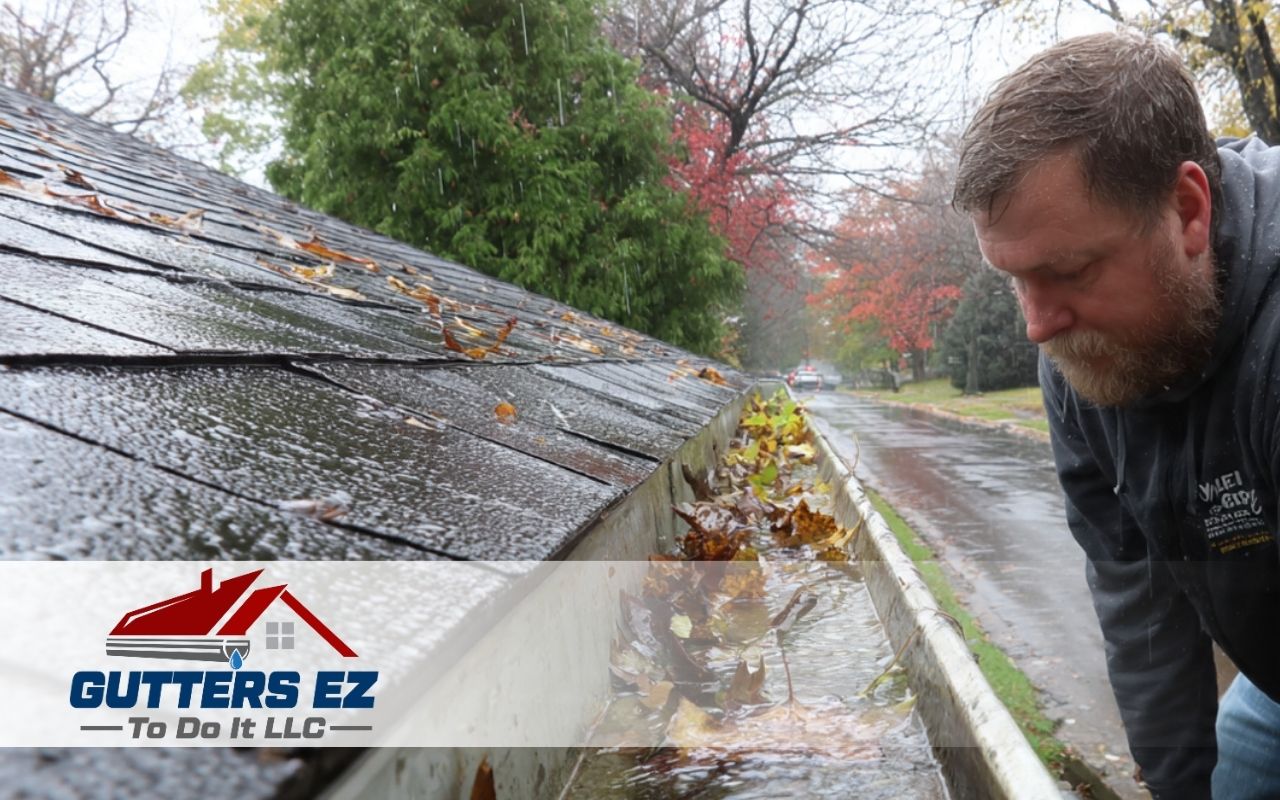
Post-Storm Gutter Damage Signs You Should Never Ignore
Start your journey to a safer home by paying attention to what’s above you—your gutters. Often overlooked, gutters help protect your home from water damage. After bad weather, problems can show up fast. That is why it’s smart to spot Post-Storm Gutter Damage Signs early.
As the storm clouds clear, take a quick look up. Watch for ice dam damage, sagging gutters, loose hangers, and fascia rot. These issues may look small at first. However, they can turn into major repairs. With a few simple checks, you can keep your home safer after severe weather.
Ice Dam Damage to Watch For After a Storm
Checking for ice dam damage starts at the roof edge and along the gutters after snow or ice melts. An ice dam forms when warm attic air melts snow, then water refreezes at colder eaves. As a result, drainage can get blocked. Water may pool behind the ice, then leak under shingles or into walls.
- Bulges of ice near gutter seams and roof joints
- Cracked seams or split corners along the gutter run
- Warped gutter metal after a freeze-thaw cycle
If you see these Post-Storm Gutter Damage Signs, remove snow with a roof rake or use a roof-safe deicer. For recurring trouble, heat cables can help keep water moving. Also, regular snow clearing can reduce hidden leaks.
Sagging Gutters and Why They Matter
When gutters start to sag, they lose the slope needed to move water to the downspout. Heavy rain, ice build-up, and debris can weigh them down. Over time, that weight pulls gutters away from the roofline. Because of that, sagging gutters are easy Post-Storm Gutter Damage Signs to spot after severe weather.
- Low spots where water sits instead of draining
- Overflow during light rain, not just big storms
- Gutter lines that look wavy from the ground
First, clear leaves and debris to reduce weight. Next, tighten fasteners or add hangers about every two feet. Then, adjust the slope so water flows toward the downspout. If the run is long, add support brackets in key areas to keep things level.
Loose Hangers That Put Your Gutters at Risk
Loose hangers let gutters pull away from the roof, so water spills over the edge instead of flowing through the downspouts. Often, you will notice small gaps between the fascia board and the gutter lip. If ignored, those gaps can grow. Then, the system may fail when you need it most.
- Visible space between the gutter and fascia
- Hangers that shift when you lightly press the gutter
- Rusty hardware or missing screws near corners
To fix the issue, inspect each hanger clip or strap from a stable ladder. Tighten screws and replace rusted parts with heavy-duty hangers. If needed, switch to hidden hangers for stronger support. In addition, adding extra hangers reduces strain on one spot.
Understanding Fascia Rot and Its Impact
Fascia rot weakens the board that supports your gutters. Fascia wood can soak up water from clogged or overflowing gutters. Over time, moisture causes soft areas, peeling paint, and dark stains. These are clear red flags that should not be ignored.
- Spongy wood when you press it gently
- Paint that bubbles or peels under the roof edge
- Dark staining around hanger points and seams
Rotten fascia cannot hold hangers well. Because of that, it can lead to sagging gutters and loose hangers. If you spot Post-Storm Gutter Damage Signs tied to fascia rot, repair minor areas with wood hardener and sealant. For severe damage, replace rotted sections, then prime and paint for a moisture barrier.
Importance of Prompt Post-Storm Inspections
After a major weather event, a quick check can prevent small problems from becoming expensive repairs. Storm winds can loosen hangers. Heavy rain can expose weak seams. Ice can crack joints. Therefore, a fast inspection helps you act before water reaches siding, roofing, or the foundation.
Focus on gutters, downspouts, and where the roof meets the fascia. Look for rust spots, small leaks, and sections that sit out of line. Also, check for water pooling near the foundation. That can point to a blockage or poor drainage.
If you need help assessing damage in your area, explore service options through gutter repair in Telford, PA so you can address issues before the next storm hits.
DIY Gutter Damage Assessment Tips
A DIY inspection can be simple if you use the right tools. Grab a stable ladder, gloves, a small hand trowel, and a garden hose. First, remove debris so water can move freely. Then, run water through the gutter to see where it backs up. As you test, watch for drips and spills.
- Mark leaks, weak seams, and low spots with chalk
- Listen for hollow sounds that may signal loose hangers
- Look for water dumping behind the gutter line
For extra context on early warning signals, review signs your gutters are failing to compare what you see with common failure patterns.
Hiring Professionals for a Full Gutter Check
If damage looks extensive, or your home has multiple roof levels, a professional evaluation can bring peace of mind. Pros can check for hidden leaks, confirm fascia strength, and measure gutter slope accurately. As a result, they often find Post-Storm Gutter Damage Signs that are easy to miss during a DIY walkaround.
Choose a licensed and insured service with strong local reviews. Ask for a written summary of findings and clear repair options. A good team can also handle high or hard-to-reach areas safely, which helps prevent accidents.
Preventive Maintenance for Long-Term Gutter Health
Regular cleaning, at least twice a year, helps prevent clogs and overflow. Gutter guards can reduce debris build-up. Also, trimming overhanging branches can limit what falls into the gutter channel during storms. With steady upkeep, you reduce future problems and protect your structure.
- Seal small leaks with a quality gutter sealant
- Tighten hangers and replace damaged hardware early
- Extend downspouts to move water away from the foundation
When you stay consistent, you reduce the chance of seeing Post-Storm Gutter Damage Signs after each major weather event.
Frequently Asked Questions
How soon should I check my gutters after a storm?
Check as soon as it is safe. Even a quick look can reveal sagging gutters, leaks, or loose hangers before the next rain.
Can ice dam damage affect gutters even after the ice melts?
Yes. Freeze-thaw cycles can warp metal, split seams, and loosen joints. That damage can show up later as leaks or poor drainage.
What are the most common causes of sagging gutters?
Debris build-up, heavy rain, ice weight, and weak fasteners are common causes. Over time, the gutter line can lose its slope.
How do I know if fascia rot is starting?
Look for peeling paint, dark stains, and soft wood near hanger points. If the fascia feels spongy, rot may already be present.
When should I call a professional instead of doing a DIY check?
Call a pro if you see widespread damage, have multiple roof levels, or notice repeated leaks. A detailed inspection can catch hidden issues.
Protect Your Home With Proactive Gutter Care
Watching for ice dam damage, sagging gutters, loose hangers, and fascia rot helps you stop small issues early. That way, you can prevent costly water damage to siding, roofing, and foundations. Combine DIY checks with professional support when needed.
If you want expert guidance from Gutters Ez To Do It LLC, reach out through the contact page to schedule an inspection after severe weather.