
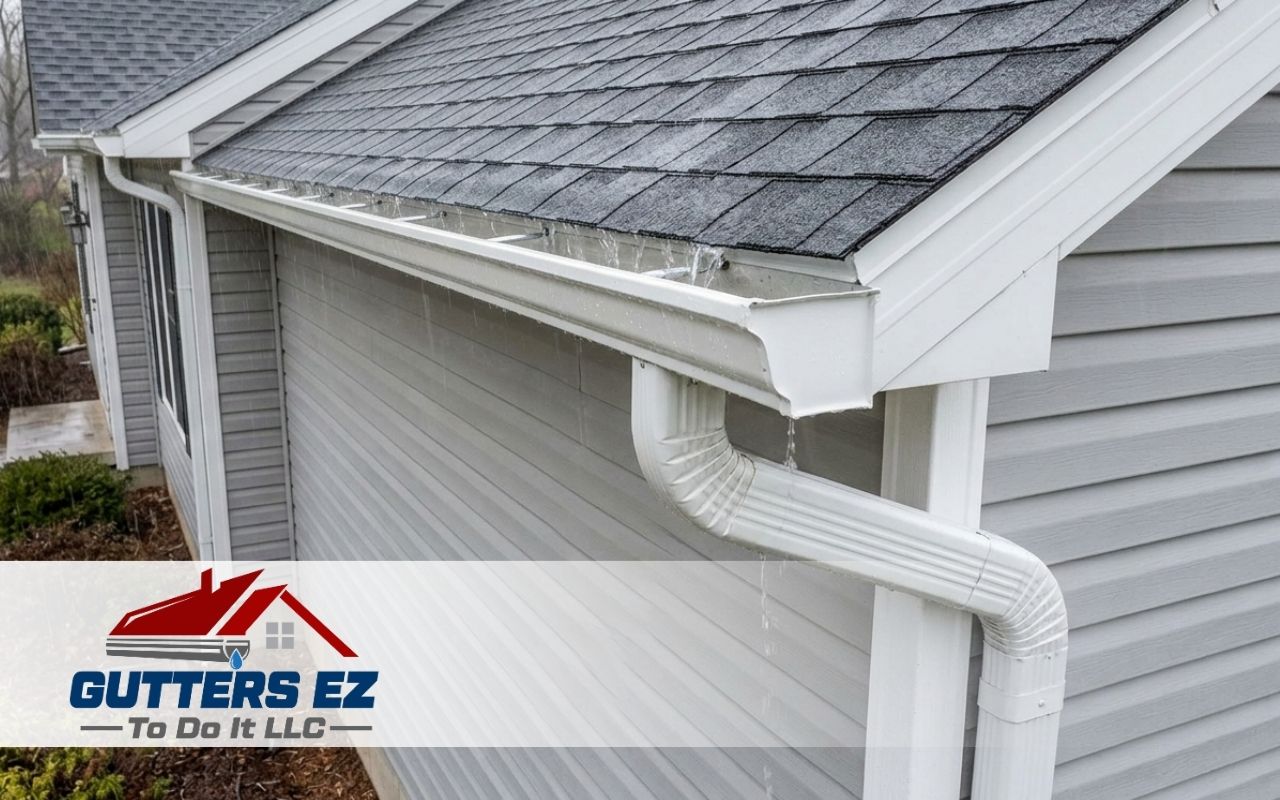
Choosing the Right Gutter Size for Pennsylvania Rain
Heavy storms can push any gutter system to its limit in Pennsylvania. At Gutters Ez To Do It LLC, we help homeowners understand the best gutter size for heavy rain in Pennsylvania so water moves away from the home instead of spilling over the edge.
The right fit depends on roof area, slope, rainfall, and drainage design. Below, we break down the key differences, explain gutter capacity, and share a simple path to choose a system that works well in strong storms.
Understanding Gutter Size for Pennsylvania Storms
Pennsylvania weather can shift fast, and that means gutters need to move water quickly. A system that is too small may overflow during long downpours, which can soak siding, loosen soil, and send water toward the foundation.
Good sizing starts with the amount of water your roof collects. It also depends on how fast that water reaches the gutter. When these parts work together, drainage stays controlled and your home stays better protected.
Comparing 5-Inch and 6-Inch Gutters
When homeowners compare 5-inch vs 6-inch gutters, the best choice often comes down to roof size and storm strength. For many homes, the best gutter size for heavy rain in Pennsylvania is the one that handles peak runoff without looking out of place.
- 5-inch gutters often work well for smaller roofs and moderate rain.
- 6-inch gutters usually carry more water during longer or heavier storms.
- Oversized gutters can help steep roofs and larger homes drain more safely.
Still, bigger is not always better. A larger profile may cost more and may not be needed on every home, especially when roof lines are simple and water load is lower.
Key Factors That Affect Gutter Choice
At Gutters Ez To Do It LLC, we look at more than gutter width alone. A smart choice comes from how your full drainage system works, including the roof pitch, the number of valleys, and where the water exits around the home.
- Roof square footage affects how much rain reaches the gutter.
- Steeper roofs shed water faster and may need more capacity.
- Downspout size and placement help prevent bottlenecks.
- Trees nearby can raise the need for easier cleaning and better flow.
Style matters too. Some homes look balanced with standard profiles, while others benefit from oversized gutters that match larger rooflines and stronger drainage needs.
Steps to Estimate Gutter Capacity
A simple gutter sizing guide starts with the roof footprint. Multiply roof length by width, then compare that number with local rainfall intensity. This helps you see how much water may enter the gutter during a strong storm.
- Measure the main roof sections.
- Check local rainfall rates for heavy storms.
- Add a safety margin for leaves, ice, and sudden downpours.
That extra margin matters. For homes facing strong runoff, the best gutter size for heavy rain in Pennsylvania is often the option that gives you room for real storm conditions, not just average weather.
What Makes Gutter Installation So Important?
Even the right size can fail if the system is installed poorly. Gutters need the correct slope, strong support, tight seams, and downspouts placed where water can leave the area quickly.
At Gutters Ez To Do It LLC, we pay close attention to hanger spacing, water flow, and connection points because Pennsylvania homes deal with rain, wind, and freeze-thaw cycles that put stress on the whole system.
To see how different systems perform on local homes, visit our guide to the best gutter systems for Pennsylvania homes.
Frequently Asked Questions
Are 6-inch gutters always better for heavy rain?
Not always. They carry more water, but some homes do well with 5-inch systems when the roof is smaller and the downspout layout is strong.
How do I know if my current gutters are too small?
Watch for overflow, standing water, splash marks, or soil washout near the house. These signs often show that the system cannot keep up during storms.
Do oversized gutters help with clogs?
They can help water move better, but they do not stop debris from building up. Regular cleaning still matters for smooth drainage.
Can new gutters lower the risk of basement moisture?
Yes, when sized and placed well, they move water farther from the foundation. Gutters Ez To Do It LLC often sees better drainage when gutter size and downspout planning work together.
Should I replace gutters when installing a new system?
If your current setup leaks, sags, or overflows, replacement may be the better long-term move. Our seamless gutter installation service can create a cleaner fit and more reliable flow.
Protecting Your Home From Water Damage
Water that spills near the house can cause more than surface stains. It can lead to wet basements, damaged landscaping, wood rot, and added wear around windows and trim.
That is why the best gutter size for heavy rain in Pennsylvania matters so much. With the right capacity and a good layout, water leaves the roofline in a controlled way instead of pooling where it should not.
Keep Your Gutter System Working Longer
Routine care keeps drainage strong year after year. Gutters Ez To Do It LLC recommends seasonal cleaning, fast repairs for loose sections, and regular checks after major storms so small issues do not turn into bigger damage.
When your system matches your roof and rainfall demands, it performs better and lasts longer. We are here to help you choose the best gutter size for heavy rain in Pennsylvania with a solution that fits your home and your weather conditions.