
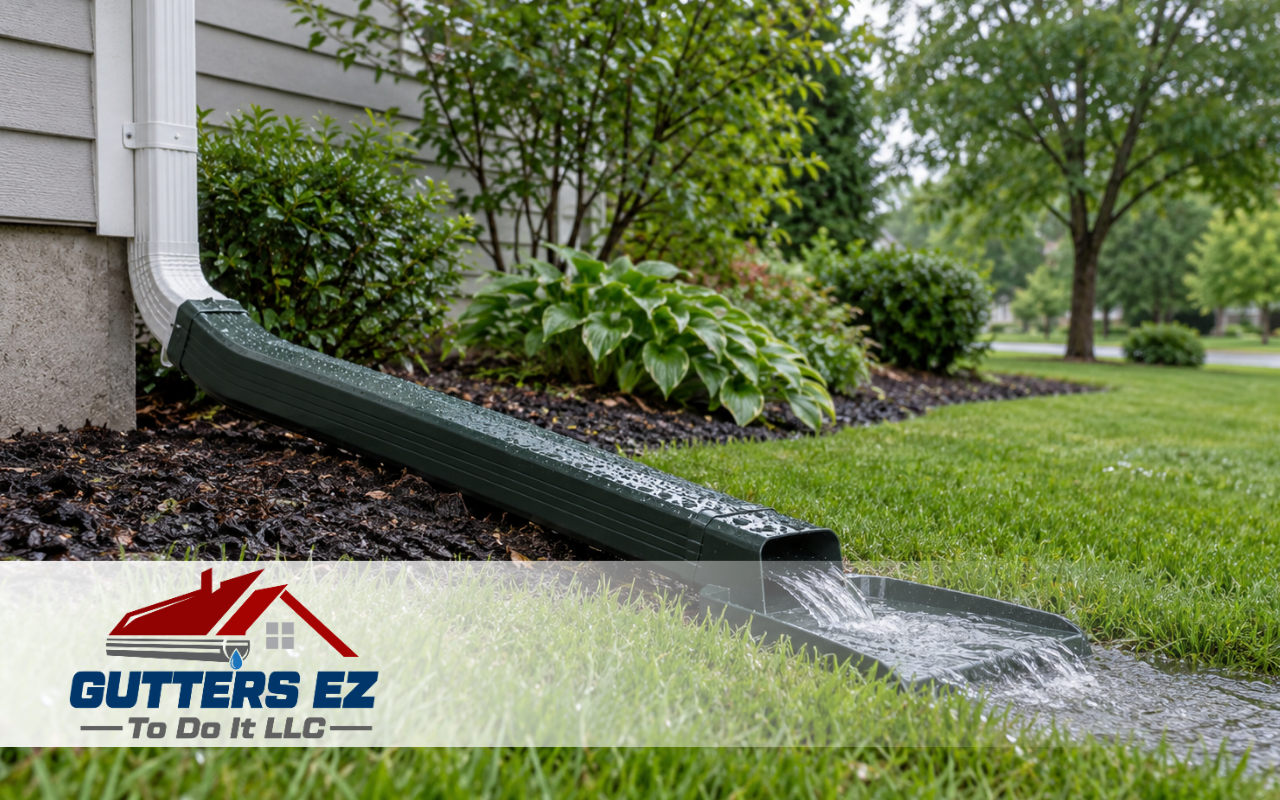
Gutter Downspout Extension Placement: How Far Should Water Move From the House?
A downspout can be completely clear and still create a drainage problem if it empties in the wrong place. Proper gutter downspout extension placement should move roof runoff away from the building without creating puddles, erosion, icy walkways, or water flow toward a neighbor. If your current discharge setup is failing, review these common downspout replacement warning signs before choosing a new extension.
At Gutters Ez To Do It LLC, we bring 18 years of experience to residential and commercial gutter systems throughout our Pennsylvania service area. We are licensed and insured and provide free estimates for downspout repair, replacement, and drainage improvements.
There Is No Single Extension Distance for Every House
The correct discharge point depends on grading, foundation type, soil, nearby walks, landscaping, neighboring lots, and where water travels after leaving the extension.
The key rule is practical: water should not discharge beside the foundation and immediately flow back toward the building.
What Good Downspout Placement Should Accomplish
- Move roof runoff away from foundation walls
- Discharge onto an area that can handle the water
- Avoid directing water across public sidewalks
- Reduce erosion near beds and slopes
- Keep extensions from becoming trip hazards
- Avoid sending water toward neighboring property
- Allow easy cleaning and inspection
Comparing Common Downspout Extension Types
| Extension Type | Best Use | Main Limitation |
|---|---|---|
| Rigid metal extension | Simple visible drainage | Can interfere with mowing or walking |
| Flexible extension | Routing around obstacles | Can shift, crush, or collect debris |
| Hinged extension | Areas needing temporary access | Must be lowered before rain |
| Buried solid pipe | Moving runoff farther away | Needs a reliable outlet and cleanout plan |
| Splash block | Small, simple discharge areas | May not carry water far enough |
Why Pennsylvania Weather Makes Placement Important
Montgomery County sees year-round rain plus winter snow and freeze-thaw cycles. Water near the house can freeze on walkways or soften soil beside the foundation.
Downspout extensions should remain useful in more than one season. Our guide to downspout extension distance for Pennsylvania winters explains why cold-weather drainage deserves extra planning.
Four Improper Drainage Problems to Watch For
1. Water Runs Back Toward the Foundation
An extension may look long enough, but poor grading can send water directly back toward the basement or crawl space.
2. The Extension Ends on a Sidewalk
Discharging water across a walkway can create slippery conditions and may turn into ice when temperatures fall.
3. Underground Pipe Has No Clear Outlet
A buried line that is crushed, clogged, or poorly pitched can send water back toward the downspout connection instead of away from the house.
4. Water Erodes Landscaping
Concentrated roof runoff can wash mulch and soil away. The outlet needs to spread or manage the flow without creating a channel.
Expert Tip: Test the drainage route with a garden hose on a dry day. Watch where the water travels after leaving the extension, not only where the extension ends.
Is the Downspout Clogged or Actually Broken?
Do not replace a downspout only because water backs up. Debris often collects in elbows, outlets, and underground connections.
Check our guide to signs a downspout is clogged before assuming the metal or pipe needs replacement. A professional inspection can separate a blockage from crushed material, loose joints, corrosion, or poor placement.
When a Longer Extension Is Not the Answer
If the yard slopes toward the building, soil stays saturated, or several downspouts discharge into one low area, broader drainage planning may be needed.
Commercial properties can have even larger roof areas. High runoff volume may require larger downspouts, additional outlets, underground drainage, or coordination with the property’s stormwater system.
Permits and Local Drainage Rules
Routine replacement of a simple extension may not require the same approval as larger site drainage work. However, relocating roof drainage, installing buried systems, working near roads or sidewalks, or altering commercial drainage can trigger local rules.
Pennsylvania’s Uniform Construction Code applies statewide, while municipalities handle many permit decisions. Work in regulated right-of-way areas can require separate approval.
Choose Placement Based on the Property
At Gutters Ez To Do It LLC, we evaluate how water moves from the roof all the way to the final discharge point. We serve residential and commercial customers, provide free estimates, and accept cash, checks, debit and credit cards, Zelle, Venmo, and Cash App.
We are available Monday through Friday from 8:00 a.m. to 5:30 p.m. Correcting poor downspout placement can improve the whole gutter system.
Request a free downspout service estimate and get a drainage plan that fits your Pennsylvania property.
Frequently Ask Question
How far should my downspout extend from the house?
The right distance depends on grading, soil, foundation conditions, and the final discharge area. The goal is to keep water from returning toward the building.
Are flexible downspout extensions a good option?
They can work well around obstacles, but they need support and routine checks because flexible material can shift, crush, or trap debris.
Can I bury a downspout extension?
Yes, when the buried line has proper slope, durable pipe, a clear outlet, and access for maintenance. Local drainage requirements should also be checked.
Why does water still pool with a long extension?
The yard may slope back toward the house, the outlet may be in a low spot, or the soil may drain poorly. Extension length alone cannot fix every site problem.
Do you replace residential and commercial downspouts?
Yes. At Gutters Ez To Do It LLC, we provide downspout replacement and gutter services for both residential and commercial properties.