
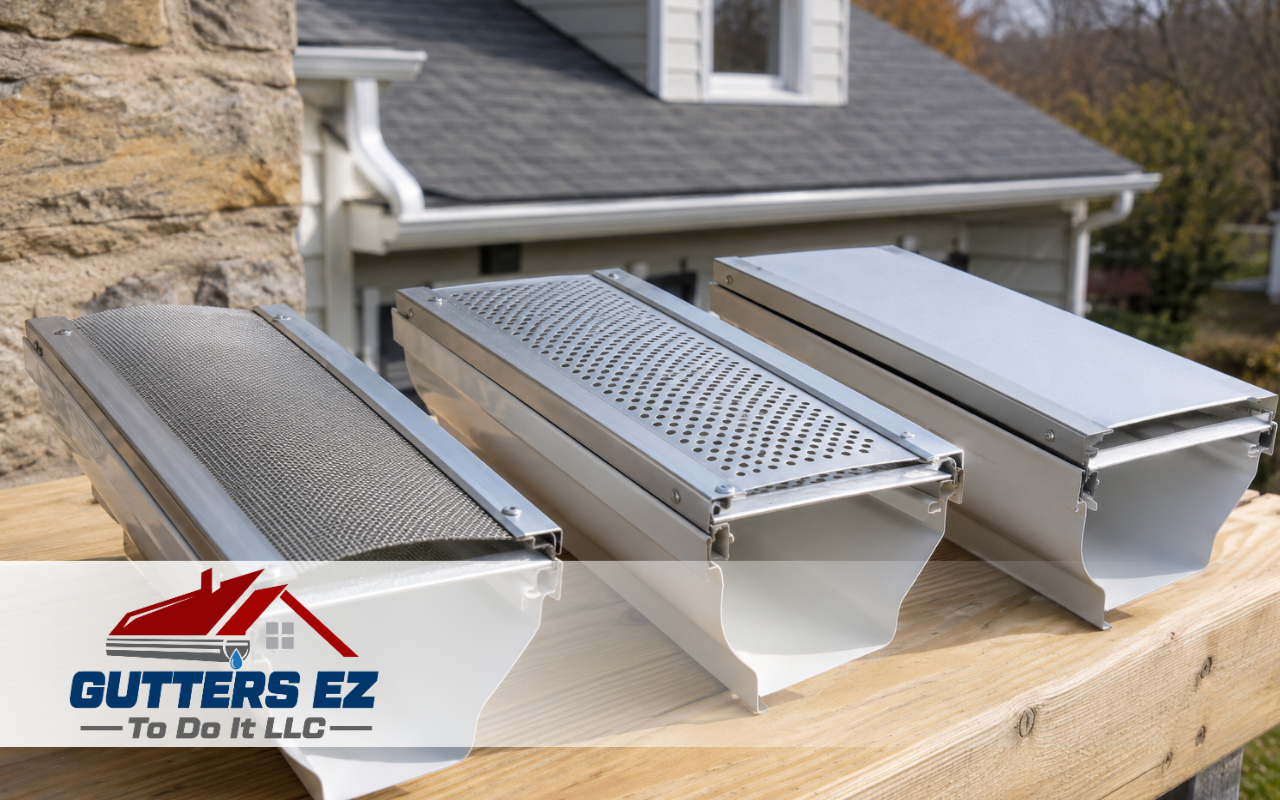
Which Gutter Guard Types Work Best in Pennsylvania?
A gutter guard types comparison in Pennsylvania shows that stainless-steel micro-mesh often provides the best filtration for mixed debris. Screens suit larger leaves, while foam and brush inserts generally require more maintenance. The right option still depends on roof runoff, surrounding trees, and gutter condition.
Guards cover or fill the gutter opening to reduce debris entry. However, no system stops every particle or eliminates maintenance. Effective protection must control local debris while allowing water to reach clear, properly sized downspouts.
Pennsylvania Weather Raises Performance Requirements
Local weather places meaningful pressure on gutter systems. National Weather Service climate normals show Philadelphia receives approximately 44.11 inches of precipitation annually. Measurable precipitation occurs on about 121 days per year, creating frequent demand for reliable drainage.
Winter performance matters as well. The same climate records show approximately 78 days annually with minimum temperatures at or below freezing. Moisture, ice, and temperature changes may expose weak materials, frames, or connections to premature deterioration.
Properties also experience different debris. Maples and oaks produce broad leaves and seeds, while pines release narrow needles. Roof shingles contribute granules that can enter guards with larger openings. Consequently, one design cannot solve every Pennsylvania gutter problem.
Mesh and Foam Guards Offer Different Benefits
Mesh vs. foam gutter guards represents a comparison between an exterior cover and an internal insert. Mesh sits across the gutter opening. Foam fills the gutter trough while allowing water to pass through its pores.
Metal mesh can provide dependable support and straightforward surface cleaning. Opening size determines which debris it blocks. Wider mesh stops leaves and twigs but may allow pine needles, seeds, and shingle granules to enter.
Foam offers simple installation and keeps large debris from reaching the gutter bottom. However, pollen and organic material may collect on or within the insert. Moisture retention, plant growth, and deterioration can also increase maintenance demands.
- Choose metal mesh for larger leaves and durable surface coverage.
- Consider foam for temporary or lighter debris applications.
- Avoid thin materials in areas with significant snow or ice exposure.
- Inspect existing gutters before installing either option.
Key Takeaway: Metal mesh usually offers stronger long-term performance, while foam may require closer monitoring for trapped debris and deterioration.
Micro-Mesh Filters Smaller Pennsylvania Debris
The primary difference in a micro-mesh vs. screen gutter guard comparison is opening size. Micro-mesh contains very fine openings designed to block pine needles, seeds, insects, and much of the grit that passes through standard screens.
Quality micro-mesh usually combines a stainless-steel surface with a reinforced aluminum frame. This construction offers corrosion resistance and structural support. Nevertheless, pollen, wet leaves, and roof granules can collect on top, so occasional surface cleaning remains necessary.
Standard screens contain larger openings. They can perform well around broad leaves and twigs while allowing substantial water entry. However, smaller material may pass through and settle inside the gutter or downspout.
Explore our micro-mesh gutter solutions when pine needles, seeds, or fine debris repeatedly affect your property.
Guard Designs Solve Different Drainage Problems
The best gutter guard for the Pennsylvania climate must balance filtration, water intake, weather resistance, and maintenance. The following comparison provides a practical starting point.
| Guard type | Best application | Main strength | Potential limitation | Maintenance |
|---|---|---|---|---|
| Micro-mesh | Pine needles, seeds, grit, and mixed debris | Fine filtration | Surface buildup may restrict intake | Low to moderate |
| Metal screen | Broad leaves and twigs | Open water entry | Small debris may pass through | Moderate |
| Foam insert | Light debris or short-term use | Simple installation | May hold organic material | Moderate to high |
| Brush insert | Large debris | No cover attachment required | Debris may become trapped in bristles | High |
| Surface-tension cover | Heavy broad-leaf exposure | Encourages leaves to slide away | Performance depends on pitch and alignment | Low to moderate |
No guard should be chosen from this table alone. Roof pitch affects runoff speed, while gutter size determines capacity. Downspout placement and roof valleys can also concentrate water in specific areas.
Key Takeaway: Micro-mesh provides the finest filtration, but screens or surface-tension covers may suit properties affected primarily by larger leaves.
Existing Gutter Conditions Affect Every Guard
A guard cannot correct loose hangers, standing water, poor slope, leaking corners, or obstructed downspouts. Installing protection over these conditions may hide the problem temporarily while overflow continues.
The Building America Solution Center explains that gutters and downspouts should collect roof runoff and direct it away from the foundation. It also emphasizes correct slope, sizing, placement, and discharge. Guard performance depends on this complete drainage path.
Before installation, inspect the system for:
- Standing water after rainfall
- Loose or separated gutter sections
- Corrosion, holes, or leaking joints
- Damaged fascia or attachment points
- Blocked downspouts and underground drains
- Overflow beneath roof valleys
Completing cleaning and repairs first creates a stable foundation for the new protection. It also helps identify whether overflow comes from debris or inadequate drainage capacity.
Professional Installation Improves Fit and Alignment
Gutter guard installation in Montgomery County, PA, should begin with an assessment of the roof and drainage system. Precise measurements help reduce gaps, loose edges, and areas where runoff might bypass the gutter.
At Gutters Ez To Do It LLC, we review gutter condition, roof pitch, surrounding trees, and common overflow areas. We then explain which designs match the property’s debris and maintenance priorities.
Professional fastening also helps guards remain aligned during storms and seasonal temperature changes. Depending on the product, incorrect placement beneath shingles could affect drainage or conflict with roofing requirements. Reviewing installation instructions and warranties prevents avoidable complications.
Our gutter guard installation in Telford provides local homeowners with property-specific planning and preparation.
Key Takeaway: Correct preparation and installation matter as much as guard type because they control fit, fastening, and water entry.
Seasonal Checks Preserve Guard Performance
Gutter guards reduce cleaning frequency, but they do not create a maintenance-free system. Surface debris may collect after storms, autumn leaf drop, or spring seed production. Roof valleys can also direct concentrated material toward particular sections.
Inspect the system during spring and fall and after severe weather. When safe, remove surface debris with a soft brush. Avoid sharp tools that could tear mesh or damage protective coatings.
- Watch the gutters during steady rainfall.
- Look for water crossing the front edge.
- Check guards for gaps or displaced sections.
- Confirm that downspouts discharge freely.
- Inspect the fascia for water stains.
The EPA recommends directing downspout water toward lawns, gardens, or other suitable areas instead of impervious surfaces. However, discharge locations must remain appropriate for the property and local requirements.
Use ground-level observation whenever possible. Professional assistance provides a safer option when the roofline is steep, wet, high, or difficult to access.
Frequently Asked Questions
Which guard handles heavy Pennsylvania leaf drop best?
Micro-mesh, reinforced screens, and surface-tension covers can manage heavy leaves. The best choice depends on whether the property also receives pine needles, seeds, or roof grit.
Are foam guards suitable for freezing winter conditions?
Foam can function in cold climates, but retained moisture and organic buildup may affect performance. Inspect it regularly for deterioration, compression, or blocked surface areas.
Do micro-mesh guards still require regular cleaning?
Yes. Fine mesh blocks small debris, but pollen, wet leaves, and granules can settle on top. Seasonal surface cleaning helps maintain dependable water intake during rainfall.
Can any gutter guard prevent every future clog?
No guard prevents every clog permanently. Guards reduce debris entry, while routine inspections keep the surface, gutter trough, downspouts, and drainage outlets functioning correctly.
When should homeowners request a guard inspection?
Request an inspection when gutters overflow, sections become loose, debris remains on top, or downspouts drain slowly. An assessment can identify whether cleaning, repair, or replacement is appropriate.
Choose Protection Based on Your Property
A useful gutter guard types comparison in Pennsylvania should evaluate filtration, water intake, material strength, installation, and maintenance. Micro-mesh often suits mixed or fine debris, while metal screens work well around larger leaves. Foam and brush inserts usually demand closer upkeep.
We provide licensed and insured guidance alongside free estimates. To identify the right protection for your roof, trees, and drainage system, schedule a gutter assessment with our team.
References
- National Weather Service Philadelphia Climate Report
- EPA: Disconnect and Redirect Downspouts
- Building America Solution Center: Gutters and Downspouts